Conference posters 2026

Explore our work

Explore a selection of our poster presentations from ISPOR 2026, showcasing innovative research, RWE, HEOR, and market access insights. Discover how our scientific expertise and integrated approach help generate evidence that informs healthcare decision-making and supports improved patient outcomes.

lightbulb and computer
Organizational Practices

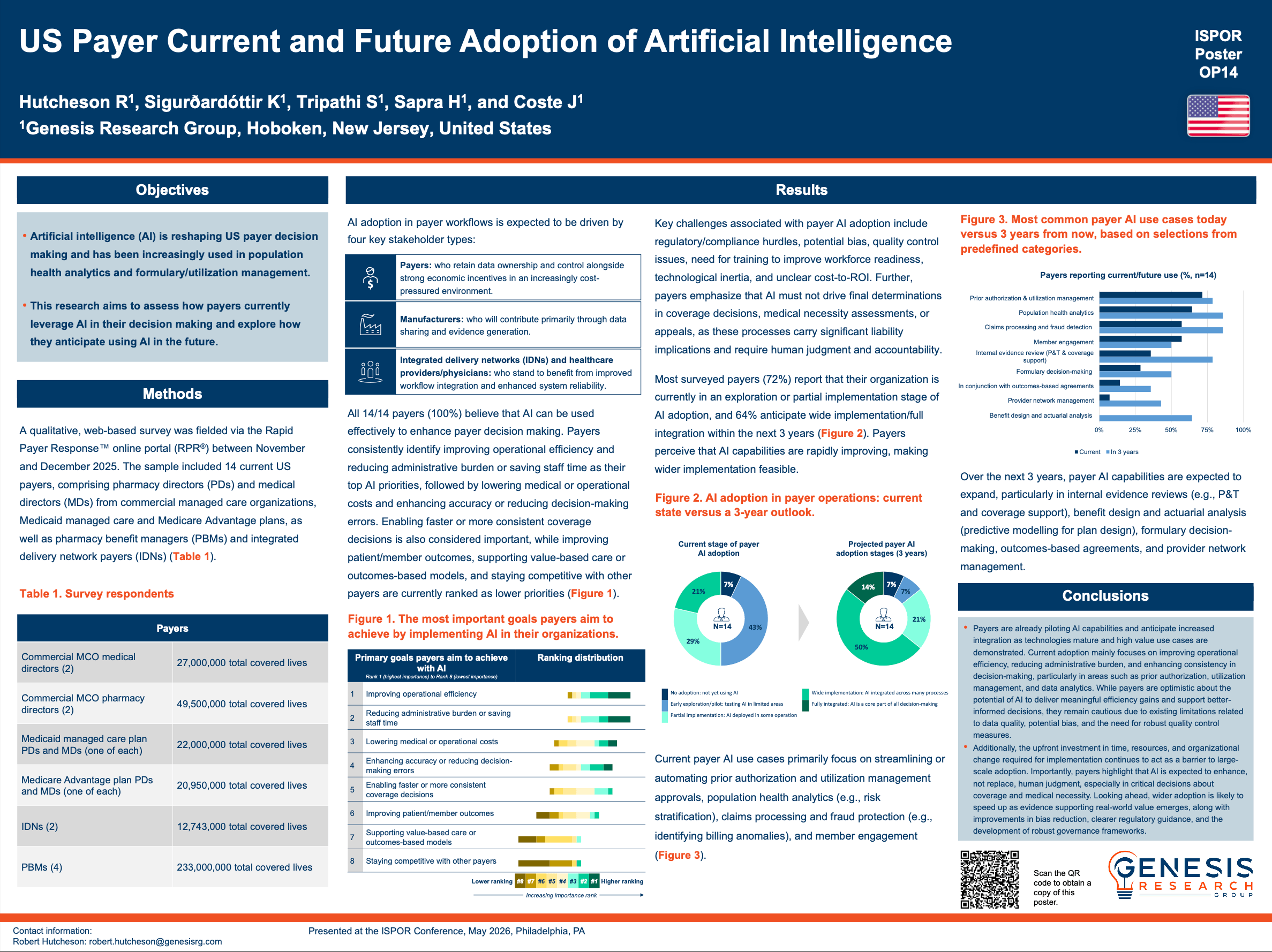
US Payer Current and Future Adoption of Artificial Intelligence

AI is no longer just something US payers are talking about. It’s something they’re actively building into how they work.

Our team was pleased to present “US Payer Current and Future Adoption of Artificial Intelligence.” Our research at ISPOR on how payers are using AI today and where adoption is headed next. What stands out most is that AI use is already gaining traction in areas like prior authorization, population health analytics, claims processing, fraud detection, and member engagement, with even broader use expected over the next 3 years.

As payer AI capabilities mature, the way organizations generate evidence, communicate value, and engage with payer stakeholders will need to evolve too. Strong data, governance, and operational readiness will be critical.

Download full case study

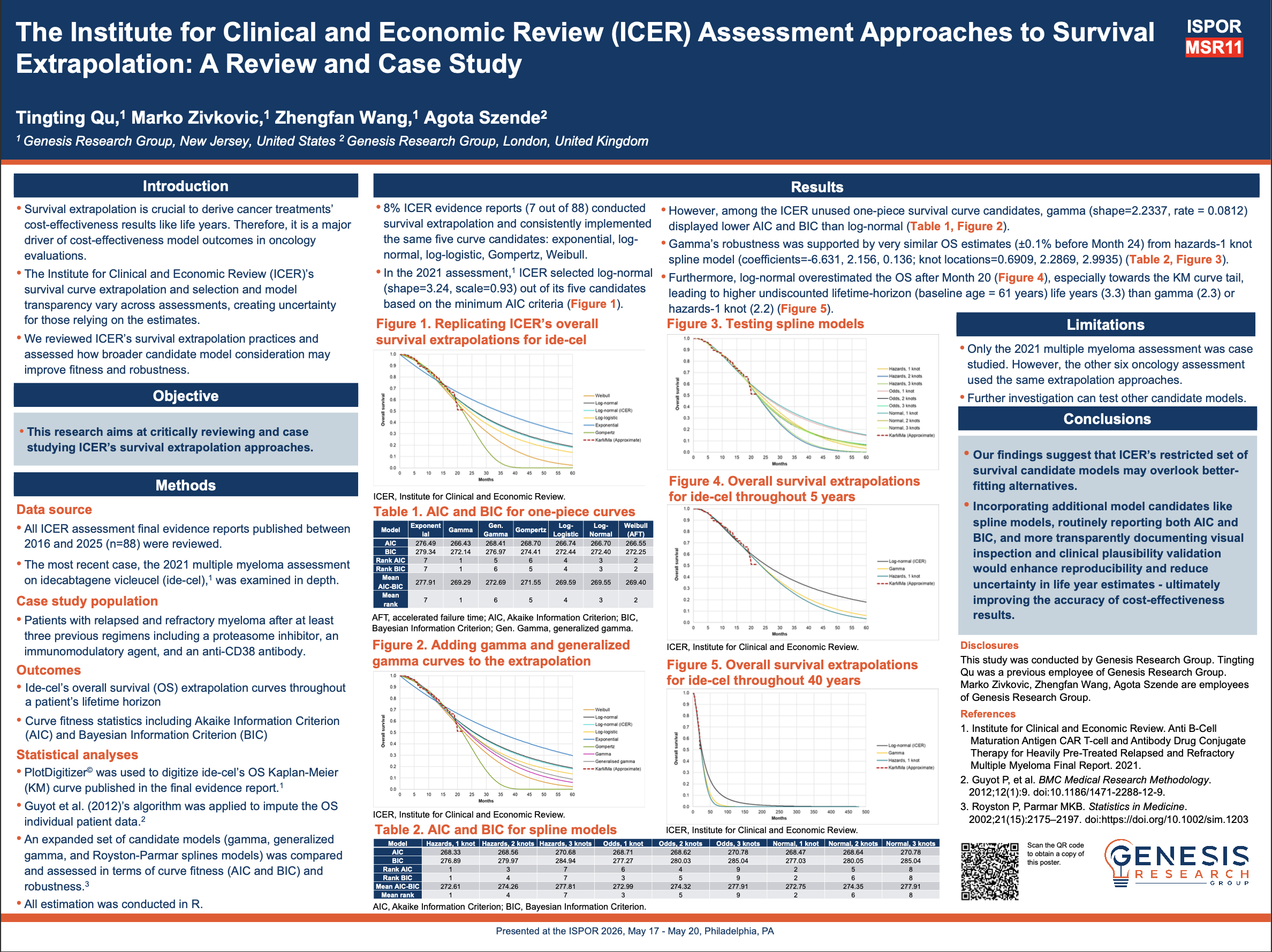
The Institute for Clinical and Economic Review (ICER) Assessment Approaches to Survival
Extrapolation: A Review and Case Study

Looking back and pressure-testing the assumptions behind oncology cost-effectiveness evaluations.

This poster reviews how ICER selected survival-extrapolation curves across oncology assessments between 2016 and 2025. Re-analyzing the 2021 ide-cel multiple myeloma assessment with a broader set of candidate models produced life-year estimates approximately 30% lower than ICER’s selected log-normal curve (2.3 vs. 3.3 LYs), highlighting how survival-curve selection can materially shape cost-effectiveness conclusions.

The findings reinforce a central idea: in oncology HEOR, the methodological choices behind a cost-effectiveness estimate are not merely technical details—they shape the evidence that payers, regulators, and patients ultimately see.

Download full case study

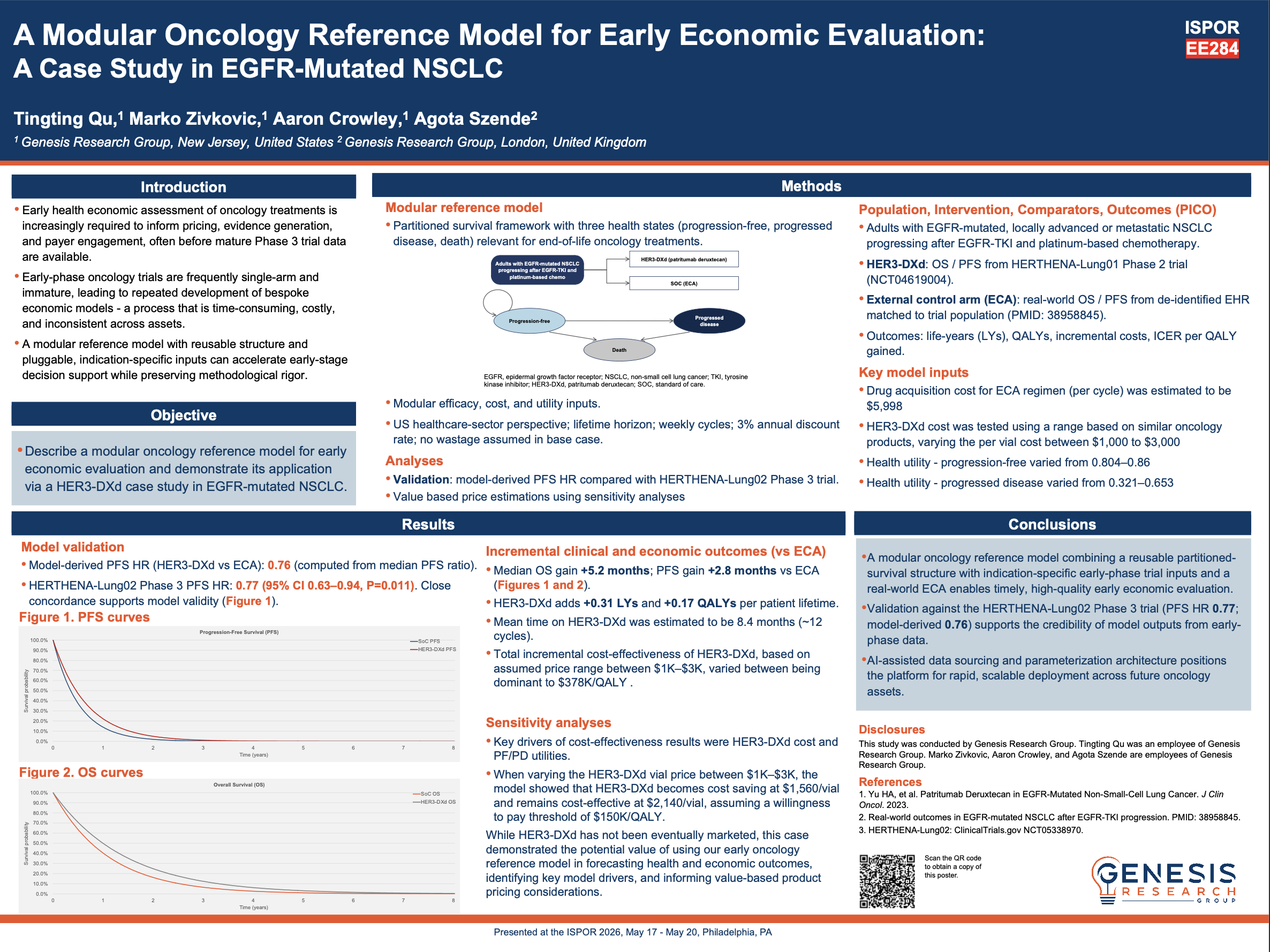
A Modular Oncology Reference Model for Early Economic Evaluation:
A Case Study in EGFR-Mutated NSCLC

In oncology HEOR, the methodological choices behind a cost-effectiveness estimate can shape decisions long before mature clinical data are available.

This poster presents a modular oncology reference model for early economic evaluation, demonstrated through a HER3-DXd case study in EGFR-mutated NSCLC. The model-derived progression-free survival hazard ratio closely matched the subsequent Phase 3 result, supporting the value of structured early-phase modeling to inform pricing, evidence generation, and payer engagement earlier in development.

Download full case study

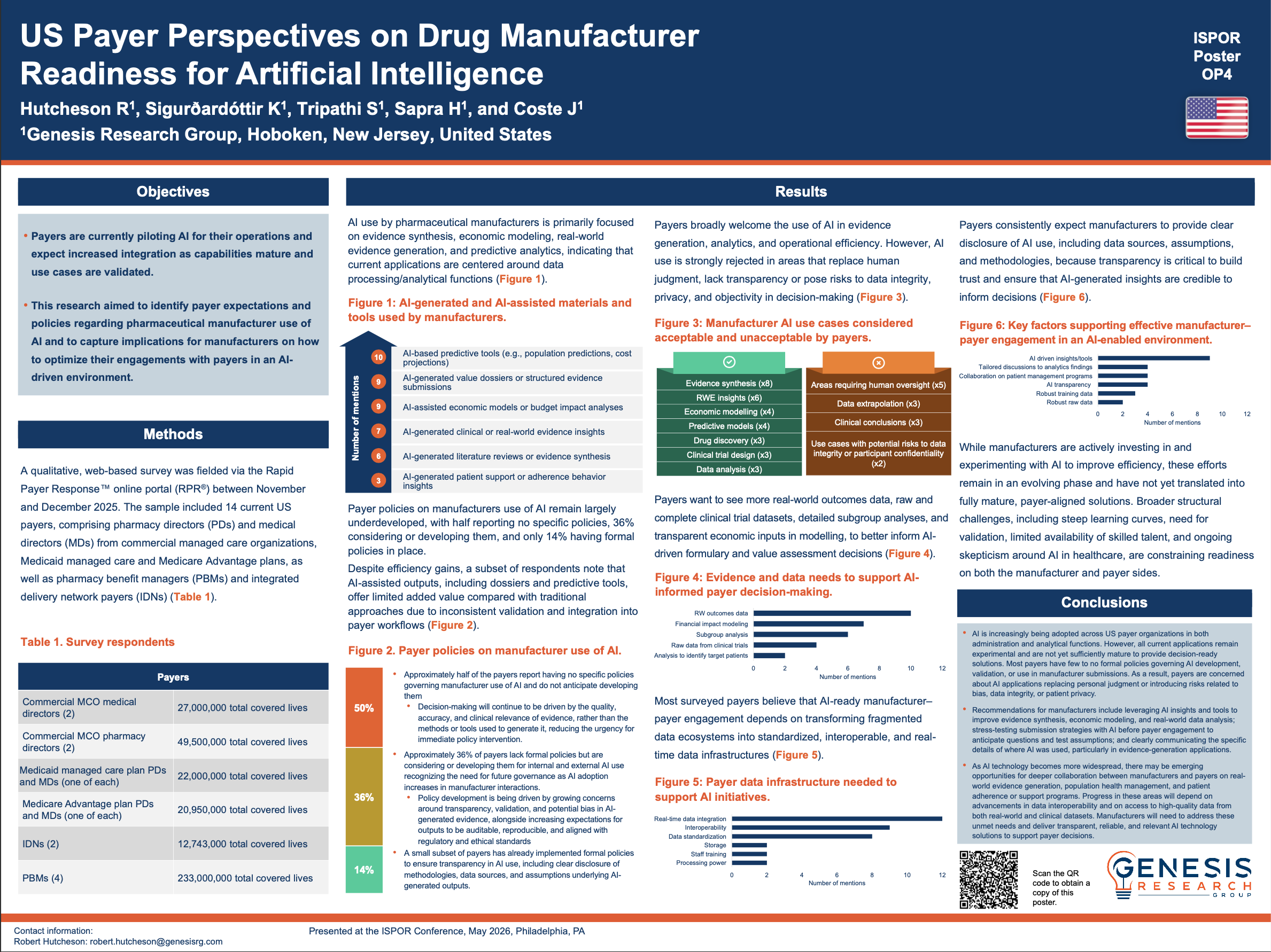
US Payer Perspectives on Drug Manufacturer Readiness for Artificial Intelligence

As AI becomes increasingly integrated into healthcare decision-making, understanding payer expectations is critical.

This poster explores US payer perspectives on drug manufacturer readiness for AI, finding that while payers are receptive to AI-supported evidence and analytics, trust depends on transparency, governance, validation, and data quality. The findings highlight that successful AI adoption will require not only innovation, but also the credibility and safeguards needed to support confident decision-making.

Download full case study
Health Technology Assessment

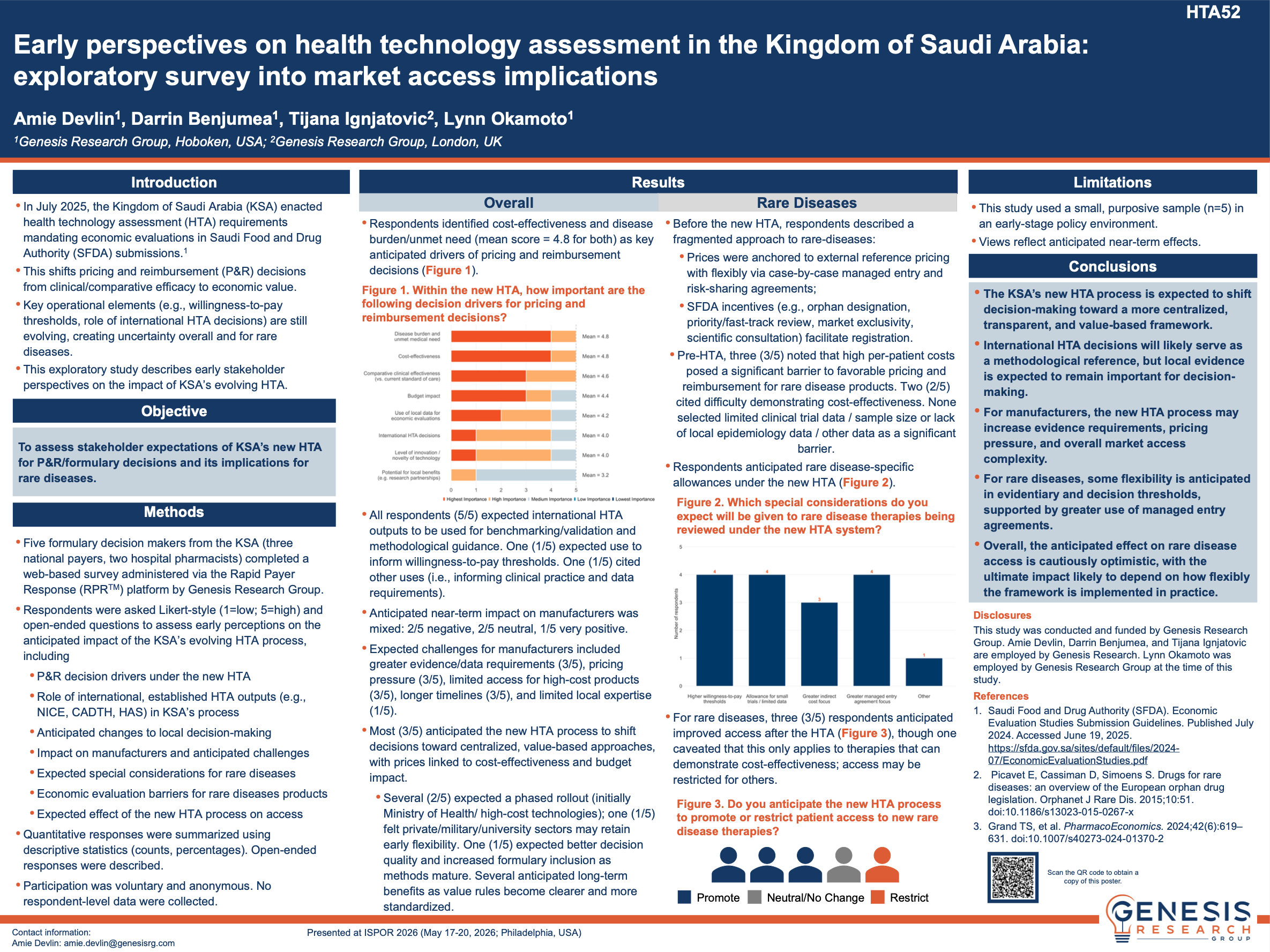
Early perspectives on health technology assessment in the Kingdom of Saudi Arabia: exploratory survey into market access implications

As the Kingdom of Saudi Arabia (KSA) implements new health technology assessment (HTA) requirements, understanding how economic evaluations may influence future pricing and reimbursement decisions is becoming increasingly important. This poster explores early perspectives from KSA formulary decision-makers on the anticipated role of HTA in market access, with a particular focus on rare diseases.

Findings suggest that cost-effectiveness, disease burden, comparative effectiveness, and local evidence are expected to be key drivers of decision-making under the new framework. The research highlights the growing importance of early evidence planning and local data generation as manufacturers adapt to KSA’s evolving value-based healthcare environment.

Download full case study
Methodological & Statistical Research
Organizational Practices

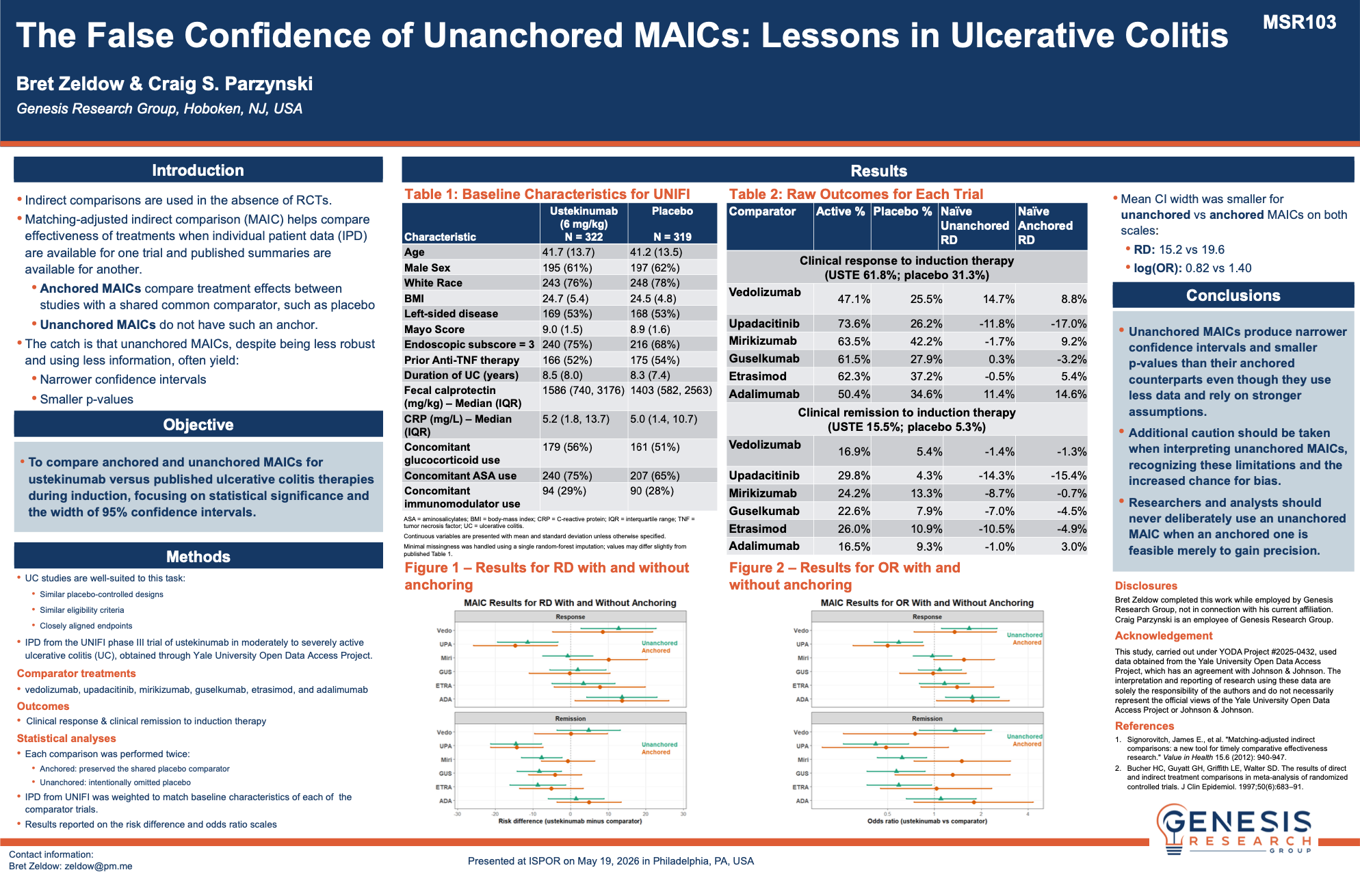
The False Confidence of Unanchored MAICs: Lessons in Ulcerative Colitis

Information coming soon..

Download full case study

Have a question for the authors or would like to discuss our experience with different indications or studies?

Get in touch

Headquarters:

HOBOKEN
111 River Street, Suite 1120
Hoboken, New Jersey 07030, US